
Morocco ’25: I’ll Take You to a Fairy-Tale / TourHero Review

MOROCCAN
Cooking Class

GLAMPING
in Sahara

THE BEST
locations
Zuzka Greizinger
STEWARDESS
I’m a stewardess, but I used to be an editor for a magazine, so I always have had my head in the clouds. In addition, I’ve always been attracted by the heights and distances and so I came up with a great idea – I could explore the world as a flight attendant! 🙂
FOLLOW ME
Only in Morocco does each door open to a fairy tale, where the mint tea tastes like a magical elixir and any oil lamp might be hiding a genie with three granted wishes…
I’ve traveled to many places and visited more than 70 countries, but I keep saying Morocco is my favorite destination. There’s something so unique and incredible about Morocco that I feel constantly inspired. I’ve never been a beach or mountain person, but cultural immersion has always been my type of travel. And Morocco has it all – beaches, mountains, desert, and above all, one beautiful, rich culture. Tradition has never looked this good as in this country. I don’t know how Moroccans do it, but they blend Arab, Berber, Andalusian, Mediterranean, Hebraic, French, and African influences all together in one incredibly tasteful mix.
But I must admit, it was not love at first sight. When I first arrived in Morocco in 2017, I was in shock. I saw only chaos and mess. But I gave Morocco a second chance and slowly fell in love. Head over heels. Forever. It was that moment I realized I was in love when I dove into the bustling souks of Marrakech and soaked in its unique atmosphere:
As the sun rises over the ancient city walls, casting long shadows across winding alleyways, Marrakech’s medina comes to life. The air fills with the aroma of fresh bread, orange blossoms, and simmering tajines. The melodic call to prayer echoes from nearby minarets, and the gentle clinking of artisans’ tools begins to rise above the morning quiet. History and modern life intertwine in a captivating dance…

Yes, Morocco is messy and chaotic, but also colorful, authentic, and full of flavors. I always wanted to share my love for Morocco with others—to show them how magical this country is. People in my country, Slovakia, usually prefer to spend their vacation by the beach. And even though there’s some magic in an Aperol Spritz glass by the Mediterranean Sea, it’s not Morocco. So, when the opportunity arose to collaborate with TourHero to lead a small group trip there, of course I took it! TourHero literally helped me get my dream trip off the ground. Here’s my full and genuine TourHero review of my 2025 group trip to Morocco…

Exploring Morocco: One Bite at a Time
I’m an experienced traveler, obsessed planner, and former travel designer with experience from a travel agency, and yet I admit planning a group trip abroad can feel overwhelming—but not with TourHero.
Before my first online meeting with the TourHero team, I did my research. Sightseeing group tours to Morocco on the market usually offer insane itineraries. At least to me. They drag people from one side of the country to the other so travelers can see all the important sights, but they forget about one thing—the most important one of all: where is the room to enjoy? I didn’t want my group to spend most of the trip in a minibus transferring from one spot to another. I wanted to focus on slow traveling, cultural immersion, and sensory exploration. And TourHero had my back.
Their team helped me fine-tune an itinerary that included all my ideas but still balanced movement, adventure, and rest. I was happy already with the first itinerary draft. Maybe planning isn’t the hardest part for me, but still, I wouldn’t have been able to create such a trip by myself. Without strong partnerships, it’s almost impossible to make a customized trip at a competitive price. But because TourHero works with dozens of local operators, pricing for my trip was super competitive. And their work doesn’t end there. They handled every logistical detail such as bookings, transportation, and payments. I was free to spend more time with my group and enjoy the trip myself. You don’t need to be an experienced planner or influencer to create a trip with TourHero. Their guidance from the start and precisely targeted questions will help you tailor one perfect itinerary. Organization is also on them; all you need is a small community of people to join you on your adventure. Start here.
Still not convinced? Check out more stories like mine on the TourHero Review Page.

From Agadir to Marrakech
Our trip started in the coastal city of Agadir due to more convenient (affordable) flight connections from Slovakia. (All members of my group were from Slovakia, like me.) But that wasn’t the initial plan. I liked that the TourHero team was so responsive and flexible to make some adjustments to the itinerary. It felt good to have support just a WhatsApp message away. That evening when we arrived at the main Agadir beach, it was extremely windy. Well, it’s a favorite surfer destination for a reason. Some who were really looking forward to seeing the ocean were disappointed that it was too cold to dive in, but a great seafood dinner at a random restaurant by the beach made up for it.

The next morning, my group experienced the magic of Moroccan breakfast for the first time—and they were all amazed. What’s better than starting a day on a sunny rooftop with a Moroccan morning feast? Imagine a light breeze, sun rays, chirping birds, the smell of coffee, fresh bread, and a full table of delicacies. Moroccan breakfast traditionally consists of fresh orange juice, olives, butter, yogurt, honey, fresh spread cheese, homemade jam, Moroccan Nutella (with argan oil), and a variety of breads and pancakes like msemmen or baghrir. Sweet Moroccan mint tea can’t be missing, too!
After breakfast, we met with our guide Ibrahim and driver Hassan, who were to accompany us throughout the whole trip. When I saw Ibrahim welcoming us with a wide smile, great energy, and arms wide open, I knew we were in good hands. We hopped in our minibus and headed toward Marrakech.

Goats on Trees? You Don’t See That Every Day
Only in Morocco do goats grow on trees—particularly argan trees. Okay, they don’t grow on them—they feast on argan tree leaves, and because argan trees grow only in the area from Agadir to Marrakech, you won’t find this view anywhere else. Of course, we had to stop and take a picture. For a small tip to the shepherd, we were even allowed to pet their adorable kids.

Welcome to the Riad… Hold On, What Is a Riad?
After a three-hour drive, we arrived in Marrakech and stopped by the ancient city walls. Cars are not allowed to enter the old town, or medina—in Moroccan language. An old man with his cart was already waiting for us to help (for a small tip) with carrying the luggage to our accommodation. Without him, we would have been lost. When you’re walking through the maze of narrow streets of the medina, you’d never guess how beautiful and spacious the houses with courtyards are hidden behind each door. Sometimes it’s confusing to find the right door to our riad. Each door in Marrakech actually opens to an enchanting fairy tale.
But what is a riad? A riad is a traditional Moroccan house with a private interior courtyard garden. Often a family-run establishment with a limited number of rooms and personalized attention to each guest. Nowadays these old houses are popular as boutique hotels and guest houses, offering a unique experience for visitors seeking to immerse themselves in Moroccan culture. I don’t understand why many travel agencies put their travelers in boring, impersonal chain hotels when there are plenty of charming riads in Morocco. Staying in one of the Moroccan riads is an experience in itself! And it was also my condition when I was planning this trip with TourHero. And they came up with the best selection of accommodations!
For the first two nights in Marrakech, we were to stay in the cozy Riad Milouda, with a pool in the middle of the courtyard and a charming rooftop sitting area. We were welcomed traditionally with the Moroccan mint tea ritual, where the tea is poured from a height to create a frothy head. The staff of our riad was incredible. A young guy, out of fun, introduced himself as Hamsik (Slovakia’s most famous football player) and memorized the name of every person in our 10-member group.

Marrakech: It’s Not Just a City
What is it about Marrakech? It’s just a city… or maybe not. Marrakech’s medina is one large souk. And the souks of Marrakech are magical. Imagine a maze of narrow alleys that are home to over 2,000 stalls and shops with artisanal crafts and traditional goods. You can see artisans at work, producing one-of-a-kind goods right in front of your eyes. Moroccan ancient artisan tradition is rich: mosaics, carpet weaving, embroidery, traditional clothing, pottery, leather goods, jewelry, silversmithing, woodwork, carpentry, aromatic spices… Moroccan artisans embody the soul of the country’s cultural heritage, preserving traditions that have transcended time, perfecting their crafts from generation to generation.
As soon as we refreshed ourselves, I took my group for a small familiarization stroll. But very soon, somewhere among the herbs and spices, our group broke up. Some of us were attracted to beautiful leather handbags while others were drawn to jewelry or art pieces. Thank God each of us found our way back to our riad on time for dinner.
An important dominant landmark and orientation point in the medina is the largest mosque in Marrakech – the Koutoubia, located just at the end of the main square, Jemaa el-Fnaa. This vibrant square, full of music, local street performers, cobra whisperers, and henna artists, gets even busier after sunset. If you want to experience the general vibe of nighttime Marrakech—this is the place to be. Or somewhere on a rooftop with a chilled Casablanca beer… After all, rooftops have cultural significance in Marrakech. Traditionally (in times of no air-condition), they have been important social spaces for gatherings, especially during hot summer nights when the ground level of houses becomes unbearably warm…

Enchanting Majorelle’s Garden
The next day, after another Moroccan breakfast feast, we were ready for a medina tour with our professional guide Ibrahim. We learned a lot of insightful information about the city and Moroccan culture from him. We visited a traditional Moroccan pharmacy full of herbs, spices, natural cosmetics, and medicines, and then finished our tour in the famous Bahia Palace. The palace is a stunning example of Moroccan architecture, with intricate details, vibrant colors, and a sprawling complex of gardens, courtyards, and rooms. The name Bahia was given to the palace in honor of Grand Vizier Bou Ahmed’s favorite wife. In the afternoon, I had combined tickets for the well-known Majorelle Gardens and the Yves Saint Laurent Museum.
Jardin Majorelle—I had a feeling it was going to be beautiful. After all, it once belonged to French designer Yves Saint Laurent. But truth be told, I never expected it to be that large and stunning. Every corner of the garden is so beautiful that you don’t know where to look first.

Majorelle Gardens (or Jardin Majorelle in French) was initially created by French Orientalist artist Jacques Majorelle over a period of almost forty years. In 1923, he purchased a plot of land near a palm grove and, as he became more established as an artist, he continued to develop it—building a Moorish-style house for himself and his wife and a Berber-style building which he named the Borj. He also painted the building in his own rich blue color that he trademarked as “Majorelle blue” and carefully cultivated 135 plant species from five continents, transforming the property into an enchanting garden. However, the garden was a very expensive passion for Majorelle and not one he could sustain after his separation in 1956. Fortunately, four years after Majorelle’s death in 1962, French fashion designer Yves Saint Laurent and his long-term business partner Pierre Bergé visited Jardin Majorelle and instantly fell in love with it…

Where YSL Found His Inspiration
Yves Saint Laurent and Pierre Bergé visited Morocco for the first time in 1966. They enjoyed many happy moments in Marrakech and usually traveled there a few times each year. Morocco became an endless source of inspiration for YSL, especially Marrakech, where he was deeply inspired by the residents, colors, and light. So when he later heard of plans to bulldoze the entire Majorelle Garden and turn it into a hotel complex, he decided to purchase and restore it. The renowned Jardin Majorelle and the Musée Yves Saint Laurent Marrakech attest to his Moroccan passion. Both YSL and Pierre Bergé also took an interest in Berber (Amazigh) art. Bergé’s museum, located in a blue house, is dedicated to his Berber art collection. Honestly, I’ve never seen more beauty in folk art. I couldn’t help but wonder what motivates this semi-nomadic ethnic group, living in small, scattered villages around the desert, to decorate and turn everything they touch into a piece of art. In my opinion, Bergé’s museum was the most beautiful museum I’ve ever seen. Unfortunately, I don’t have proof, as it’s not allowed to take pictures inside—but go see for yourself and get inspired!
I bet the Oasis Villa in the middle of the gardens, where YSL and Pierre Bergé used to live, is also a wonder. But it’s not open to the general public—only for VIP private tours, where prices start at five thousand dollars per tour…

Feast for the Eyes
We closed the third day with a Moroccan dinner at the fancy Riad Wow, whose design truly left us with one “wow” expression. There, my group tried Moroccan tajine or pastilla for the first time. Tajine is a traditional slow-cooked stew typically prepared in a clay pot also known as a tajine, while pastilla is a meat pie that combines meat with spices like cinnamon and ginger.
The next day after breakfast, we left The Red City—a name Marrakech earned due to its orange-red buildings made of local clay. (By law, the buildings must be red.) We headed south across the beautiful Atlas Mountains. The main program of the day: a feast for the eyes. On our epic drive, through winding roads and the scenic Tichka Pass, we crossed the Valley of 1000 Kasbahs.

Local Argan Oil Manufactory
Our first stop was a local argan oil manufactory where we could observe how this precious pure argan oil is produced in Morocco. And of course, we left with full bags of argan oil products.
Argan oil is made from the seeds of the argan tree, which is very rare. It grows only in a narrow strip of semi-desert between Morocco’s Atlantic coast and the Atlas Mountains. Plus, it takes about 40 kilograms of dried argan fruit to produce one liter of oil! Roasted argan seeds are used to produce culinary argan oil, which has many health benefits such as cholesterol control and immune support, while pure seeds are used for cosmetic products with anti-aging, wound healing, or anti-hair-loss effects. Top cosmetic companies like La Mer use only small amounts of argan oil in their exclusive products, but in Morocco, you can get pure 100% oil. Isn’t that awesome?
Perhaps one of the greatest benefits of argan oil is that its production can’t be easily mechanized, and so even larger commercial producers continue to employ local workers. The best ones ensure a comfortable and healthy work environment, meals, and daycare for children.
For lunch, we also stopped at a random place. A simple, slightly shabby restaurant was very busy, full of locals. Simple legumes were served, but every dish was so tasty that we found it better than in any fancy restaurant. I personally love that every food in Morocco is genuine and made from fresh ingredients.


Boumalne Dades
After a 7-hour-long drive with some interesting stops, we finally arrived at Boumalne Dades and checked in for the night at the Kasbah Tizzarouine Hotel with a magnificent view over the valley. The Dades Valley is one of the most scenic regions of Morocco. The area is lined with historic kasbahs and hosts numerous markets teeming with local produce and goods. It is also home to the country’s rose fields, where Moroccans have spent centuries producing and selling rose products (like rose oil and rosewater) to perfumeries worldwide. It’s an ideal place for hiking, exploring, or meeting some nomadic families who move across the region. Or just having a relaxing afternoon by the pool at your kasbah.
“Kasbah” means fortress or citadel in Morocco, and the one we stayed in really was a fortress. And as in every proper fairy tale, there was no shortage of traditional musicians who created an amazing atmosphere at dinner. Another great choice of accommodation from TourHero. Staying in one of the historic kasbahs is a must for the most authentic experience.

Lunch at a Local Home
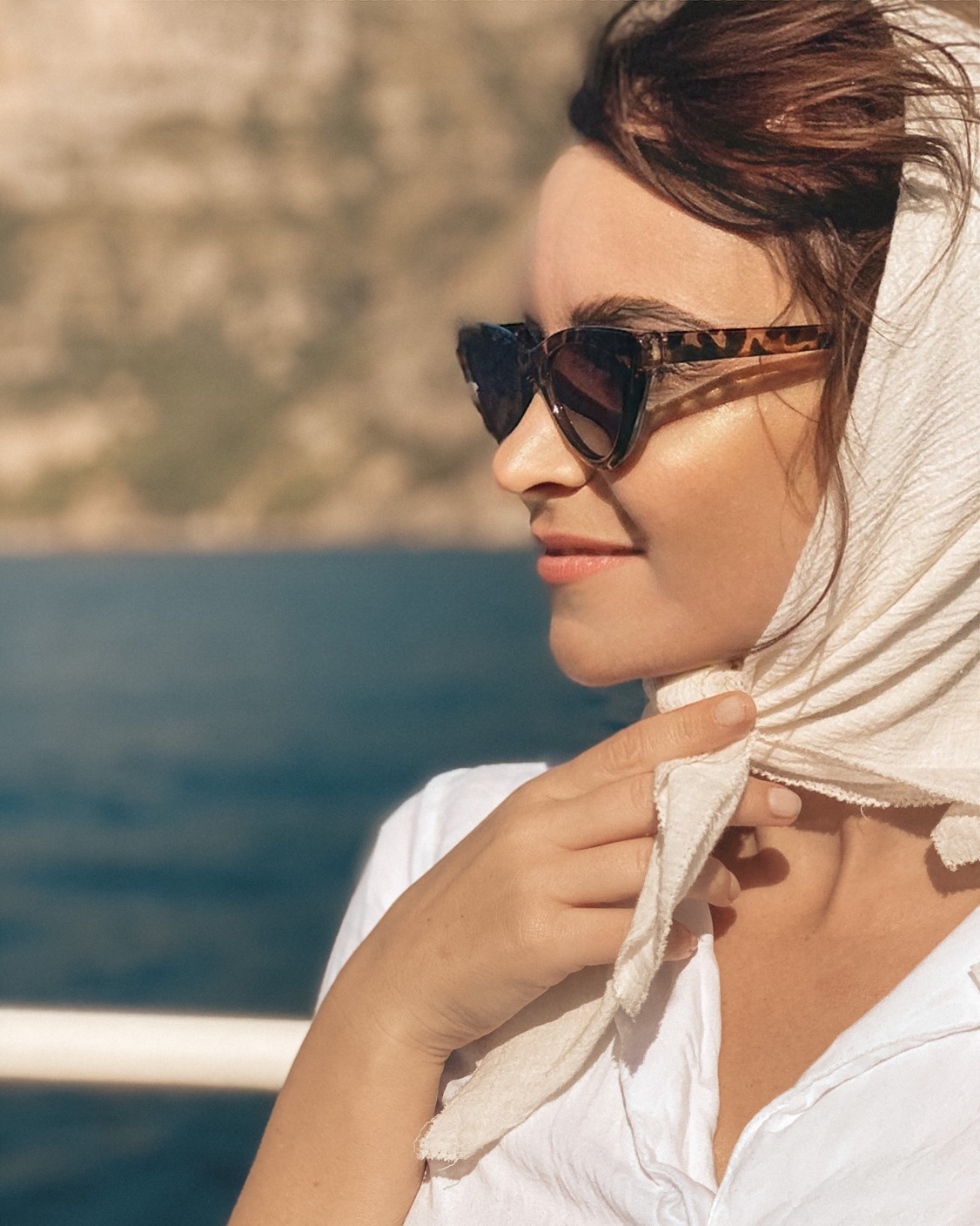
Our eyes saw jaw-dropping landscapes, our noses smelled a mix of flavors, we tasted unique Moroccan cuisine and listened to Afro-Moroccan drums, and on our fifth day, we were touched by the warmth of Berber hospitality at their home. As a nice surprise, our guide Ibrahim took us for lunch to his family house near Merzouga. Moroccan “pizza” (flatbread filled with potatoes and vegetables) and mint tea were served. We also visited a local clothing manufacturer where we were able to get dressed up like Berbers… I always wanted to learn how to tie a scarf in a Berber way. It came in handy when crossing the Sahara…


Relax by the Pool
When we reached Merzouga—a small Moroccan town in the Sahara Desert—we still had a couple of hours left before our planned sunset camel trek. And here came Ibrahim with his amazing plan to take us to the pool at the Madu Hotel, which belongs to the same owner as the desert camp where we were about to stay for the night. A lazy afternoon by the pool in a beautiful hotel after a long drive was exactly what our group needed! We could even see the Sahara dunes in the distance, calling us…

Camel Trek
Even though I’ve personally been to Morocco many times, I’ve never had a chance to experience glamping—luxurious camping in the Sahara. It had been on my bucket list for so long. I also noticed many travel agencies don’t include this experience in their itineraries. It was very important to me that glamping was part of my trip. It was truly something I was looking forward to the most!
And there’s only one way to reach our Madu Luxury Desert Camp—across the dunes. And on a camel’s back! As the sun began to set and the temperature dropped, we tied our new scarves around our heads as we had just learned from the Berbers—to protect ourselves from sun and sand—and we were ready for the camel trek across the dunes. The epic journey took about an hour and a half, and eight people out of eight confirmed that this trek was the best part of the whole trip. Two of us preferred to go by SUV with our luggage, but later, when they saw how happy we were when we arrived at the camp, they expressed their regrets. Fear should never stand in the way of such an unforgettable experience! Camels are very gentle animals, and despite their humps, it’s quite comfortable sitting up there.


Glamping in Magical Sahara
Real magic happened when the sun set on the dunes. We could feel it in the sparkling air as the sun’s last rays reflected on the sands. Those colors, vastness, silence, sparkle… that was pure, indescribable magic…
And then we saw our tents for the first time. From the outside, just a tent in the desert—but inside, it had literally everything like a proper hotel room, including a shower! Actually, the room was more spacious, cozy, and better designed than any other hotel room I’ve ever been in before. Only the TV was missing, but who would need a TV in such a beautiful place?
After another delicious dinner that could compete with a fancy restaurant’s, we all gathered by the bonfire under the sky with thousands of stars and live music. Just like in 1001 Arabian Nights. I couldn’t imagine a better atmosphere.


Back on the Road
The next day, nobody missed another kind of magic in the Sahara—sunrise over the dunes—even though it meant waking up early. It was all worth it! After breakfast, we unfortunately had to leave the desert, as more experiences were awaiting us, but this time we exchanged camel backs for the back of a car. And our driver was crazy! There were moments when he was driving the car across the dunes and he didn’t even hold the wheel! But it was so much fun!
At the parking lot, Ibrahim was already waiting to take us on another long drive from Merzouga to Aït Ben Haddou. Somewhere in the middle of the journey, we also stopped at Todra Gorge. Where once there was a massive river, now there is a beautiful limestone canyon.

Aït Ben Haddou
After a five-hour drive, we finally arrived at Aït Ben Haddou—a historic ksar (castle or fortified village), a great example of Moroccan earthen clay architecture, a UNESCO heritage site, and above all, a favorite Hollywood movie location. You might recognize it from films like Game of Thrones (Yunkai), Gladiator, Kingdom of Heaven, and many, many more.
Most travel agencies bring people to Aït Ben Haddou just for a few hours to see the famous site, but that’s a huge mistake. Aït Ben Haddou is worth at least an overnight stay—especially if you get to stay in such a beautiful place as we did: Riad Caravane.


Riad Caravane
This boutique-style riad, where every room is different and each one beautiful in its own way, is to me the most beautiful riad in all of Aït Ben Haddou. Riad Caravane is definitely unique. We felt like we were staying inside an art gallery—but with genuine hospitality that made us feel at home. The interiors are stunning, and the whole design is a beautiful blend of modern, traditional, Moroccan, and African influences. Every thoughtful detail reflects great taste and connects to the surrounding landscape. We couldn’t stop admiring the rugs, lamps, paintings, handcrafted decorations.
I can’t skip mentioning the absolutely amazing staff and the food we were served for dinner. And it’s located just a 15-minute walk to the well-known UNESCO site.


Ksar Aït Ben Haddou
The next day we had free time until 11 a.m. Anyone who wanted to could visit the site on their own. Some preferred to stay and relax at our beautiful riad, but three of us, including me, woke up early and went for a walk toward the ksar before breakfast. I wanted to enjoy the site before tourists started arriving—and it was a great decision. The weather and soft morning light were perfect, small stalls with local products around the ruins were only just beginning to open, and we were the only three visitors. An ideal opportunity to take many pictures.
Our morning trip to the ksar took longer than expected, so we were very late for breakfast—but the staff was so nice to wait for us. Otherwise, we would’ve missed the best homemade apple-coffee jam ever.

Back to Marrakech
By the evening, we were back in vivid Marrakech. Usually, I don’t like crowded places, but Marrakech is different. Here, you don’t mind the people and crowds—they are part of the city’s bustling atmosphere. This time we checked into another riad—The Little Hara. Another room, another rooftop, different design—but again, incredible staff. I would never trade staying in a riad for a hotel. It feels more private and authentic.

Street Food Tour
Our second-last evening in Morocco featured a different kind of dinner. Another expert, guide Amin, came to our riad to take us on an unforgettable street food tour. I knew that the best food doesn’t have to be expensive, but even I didn’t expect Moroccan street food to be that good! We walked a lot (to make space for digestion), but we ate even more.
We started with different kinds of olives—black, green, pink—and then moved to a stall offering Moroccan sandwiches: delicious local bread filled with minced beef or sausage, egg, cheese, and vegetables. I couldn’t believe such a big portion of a delicious dish cost only €1.50!
Next stop was msemmen (my favorite)—local semolina flatbread with multiple layers, filled with cream cheese or vegetables. So simple, but so yummy! Slowly we were getting full, and we hadn’t even started!
Next stop: Moroccan harira soup made of tomatoes and chickpeas, served with dates. It tasted better than the one we had at the fancy Riad Wow the other day. Those brave enough could try snails in herbal water. And for snails, it wasn’t bad at all!
Then we tried Moroccan doughnuts and a mixed fruit smoothie. And when dessert time finally came, we were so full that we couldn’t eat another bite. Moroccan pastries looked absolutely delicious, but we took them (a whole box!) home for later.
Super strong spiced tea at the next stop was a life-saver! Made of dozens of herbs and spices—great for health and digestion. And the last stop? Spiced almonds coated in poppy seeds, cinnamon, or even anise… After this tour, we didn’t walk back to the riad—we rolled!

Moroccan Cooking Class
Our trip was, unfortunately, slowly coming to an end. We had already traveled through the food and gotten to know that Moroccan cuisine is a delightful blend of flavors, colors, and textures—making it a unique culinary experience. And on our last day in Morocco, we had a chance to master the art of crafting Moroccan tajines under the supervision of pros. I never thought a cooking class could be this much fun! Besides chicken tajine au citron, we also learned to prepare Moroccan salad, local bread, and eggplant salad. Everybody passed the test, got valuable recipes, a certificate, and a special gift—a tajine clay pot. So now we can continue practicing Moroccan cooking at home. For lunch, we each ate what we cooked, and nobody complained!

Bacha Coffee
In the afternoon, we had free time for last-minute shopping, souvenirs, and gift hunting before heading home. But I had one more place in mind to visit—one of the most beautiful cafés in the world: Bacha Coffee.
The story of Bacha Coffee begins in the medina of Marrakech. Built in 1910, the spectacular Dar el Bacha palace united the greatest cultural and political minds of the century over pots of “coffee of Arabia”—or Arabica, as it is known today. Nowadays, their menu features over 200 freshly roasted coffees from 35 countries around the world, with many infused flavor options. I tried 100% Arabica coffee with Seville orange flavor—and it was honestly just perfect.
The problem is that this place gets really busy. And they don’t accept reservations. If you want to get a table, you need to wait in line—and the waiting list is for 2 hours! I gave up the first time I was in Marrakech, but this time I was ready to wait—and it paid off. I got lucky and had my table in less than 40 minutes.
The good thing is that the café is inside the palace, so you can wait while admiring Moroccan architecture—similar to Bahia Palace, but smaller and less crowded.

Farewell Dinner
Our farewell dinner with musicians and belly dancers took place in a beautiful historic building from the 16th century. The food was remarkable, dishes were bottomless, and the venue was stunning. There were no musicians and only one belly dancer, who didn’t seem in the mood for dancing… However, this small detail couldn’t ruin our overall impression of one extraordinary trip with TourHero. We are bringing home not only thousands of stories, souvenirs, and memories—but valuable recipes too.

TourHero Review
Reflecting on this entire journey, my TourHero review is nothing but positive. I can’t imagine a better partner for creating an experience like this.
If you’re dreaming of leading your own trip, I believe that TourHero can help you make it happen. Read more stories like mine on the TourHero reviews page, and you’ll see for yourself…
Zuzka Greizinger
STEWARDESS
I’m a stewardess, but I used to be an editor for a magazine, so I always have had my head in the clouds. In addition, I’ve always been attracted by the heights and distances and so I came up with a great idea – I could explore the world as a flight attendant! 🙂
FOLLOW ME


